
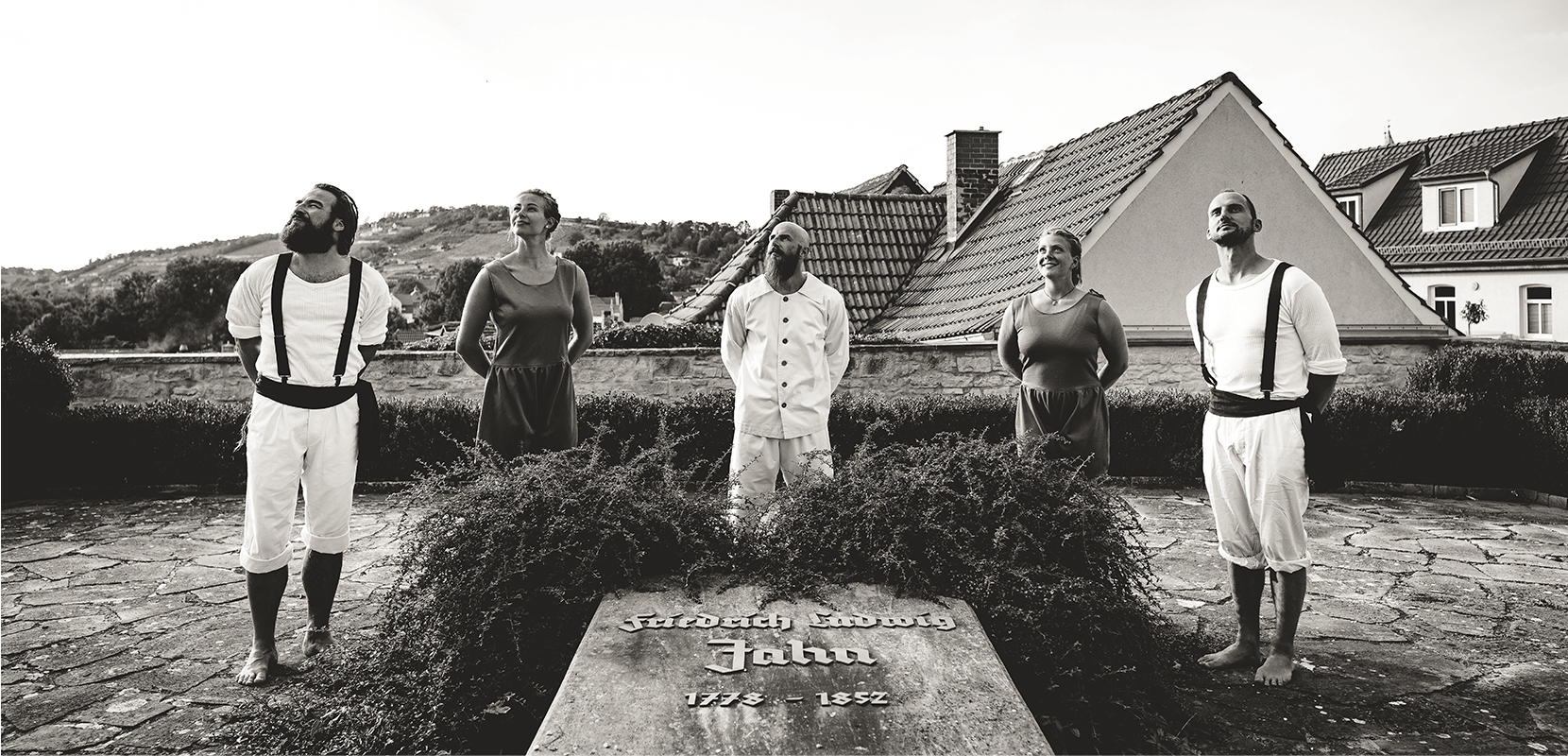

Gymnastics father, gymnastics rascal, reformer, nationalist, Napoleon hater, gymnastics "daddy", chauvinist, national hero, anti-Semite, Democrat eater, sportsman ...
"The gymnastics father had something for everyone, and what just fits posterity with its opposing views is exploited and Jahn is presented as the model of it."
(Workers' gymnastics leader Karl Frey, 1906)
All political systems of the 19th and 20th centuries have made use of the historical person. Jahn and the reception associated with him are in a certain sense symbolic of the biography of the Germans. His work is connected with questions that still reach into the present and whose answers are constantly being renegotiated. However, Jahn's topicality results not only from the social need for historical lines of impact, but also from the attractiveness of this dazzling, legendary, often contradictory and therefore controversial personality, in whose writings everyone can find a quotable sentence that proves their own interpretation and ideological position.
Jahn polarizes! Often, however, it is not the content at all that stimulates interest in Jahn, but rather the imagery of this association-laden personality that enables an emotionally charged contemplation. The Jahn image is therefore more often "image" than content.
BiographyFriedrich Ludwig Jahn
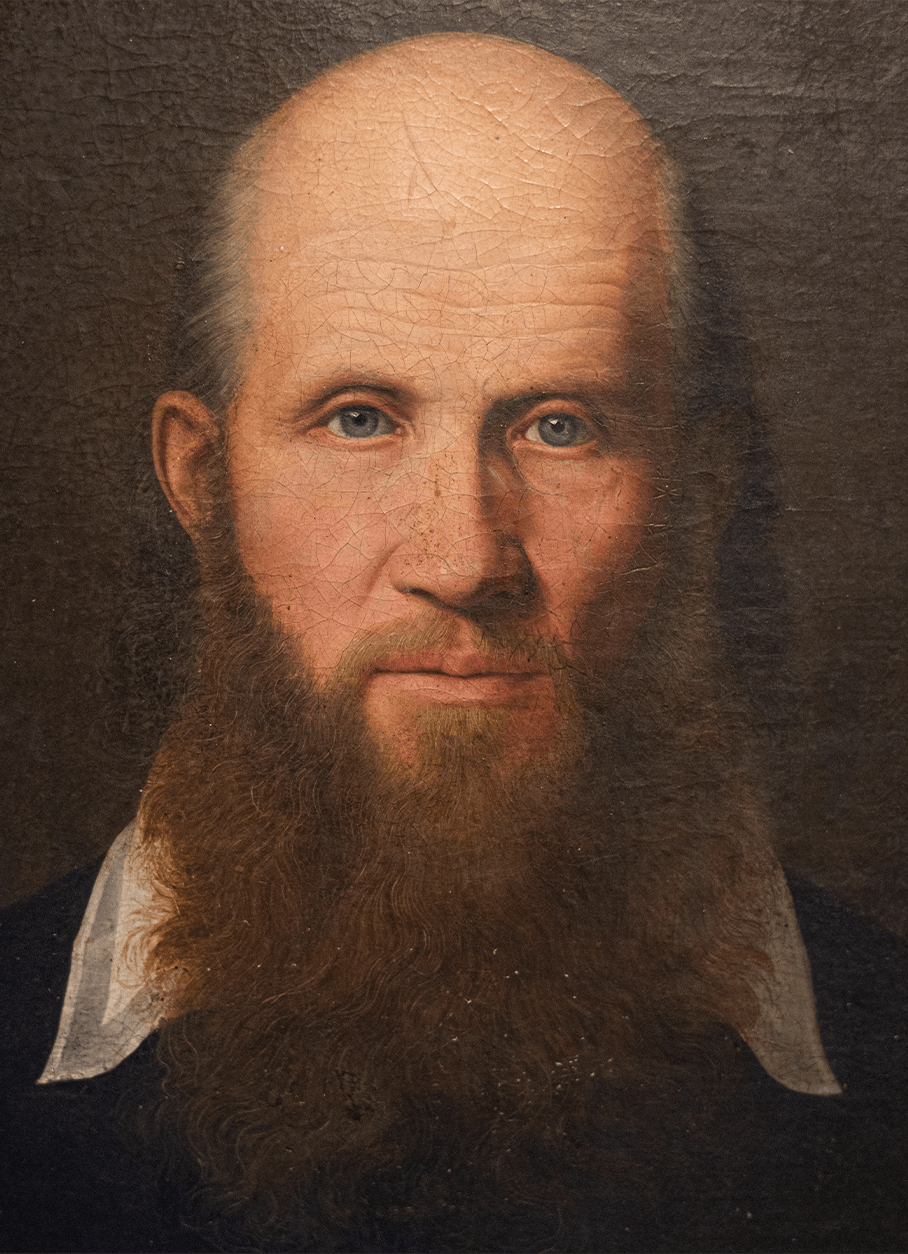
Chronology/ Curriculum vitae
Friedrich Ludwig Jahn was born on 11.8.1778 in Lanz (Prignitz). was born the son of a village priest, attended grammar schools in Salzwedel and Berlin, and studied mainly history and linguistics in Halle, Greifswald and other universities. From 1803 to 1805 he worked as a tutor in Mecklenburg.
August 11, 1778
Friedrich Ludwig Jahn is born in Lanz as the son of the village priest.
1791 - 1794
He attends the grammar school in Salzwedel.
1794 - 1795
Gymnasium zum Grauen Kloster in Berlin (without graduation)
1796 - 1803
Studies in Halle, Greifswald and attendance of further universities
1803 - 1805
tutor in Mecklenburg
1805 - 1806
Continuation of studies in Göttingen
1806
Napoleon's victory at Jena and Auerstedt; Jahn witnesses the defeat of Prussia and the occupation of other German states. He makes the decision of his life to work for the unity and freedom of Germany.
1807
Visit to GutsMuths in Schnepfenthal with a tour of the gymnastics centre there
1809
- Teacher at the Grey Monastery in Berlin
- sucker punch
1810
Jahn is an assistant teacher at the Plamann Institute, takes pupils outdoors for physical exercise and games, founds the secret "German Federation" with Friesen and publishes his programmatic book "Deutsches Volksthum".
1811
On June 18, Jahn opens the first public gymnastics center in Berlin's Hasenheide and thus initiates the German gymnastics movement, places gymnastics in the service of national education and preparation for the war of liberation against the Napoleonic occupation, and works out the "Burschenordnung" with Friesen, which is to put student life at the universities on a new footing.
1813
Jahn joins the Freikorps Lützow with older gymnasts from Hasenheide as a war volunteer, successfully recruits further war volunteers for this military unit, but is overwhelmed with the task of a battalion commander; Militarily, the Freikorps Lützow remains insignificant, but is later stylized as a symbol of "popular resistance" against foreign rule; Ernst Eiselen, Jahn's co-worker on the Hasenheide gymnastics field, continues the gymnastics activities on the Hasenheide with the older gymnasts during the war years. From 16.10.1813 to 19.10.1813 the Battle of the Nations took place near Leipzig.
1814
On behalf of the Prussian government, Jahn is in Paris, marries Helene Kollhof in the village church of Neuenkirchen near Neubandenburg, receives an annual honorary salary from the state and is nominated for the Iron Cross.
1815
At the Congress of Vienna, Jahn incurs the displeasure of the noble assembly of princes due to his appearance and his appearance. At the University of Jena, former Lützowers and followers of Jahn found the "Urburschenschaft". Student gymnasts, former Lützowers found the Urburschenschaft in Jena on 29.05.1815 according to Jahn's ideas.
1816
Five years after the opening of the Hasenheide gymnastics centre, Jahn and Eiselen publish the fundamental textbook "Die deutsche Turnkunst zur Einrichtung der Turnplätze" (The German Art of Gymnastics for the Establishment of Gymnastics Courts), which they want to be understood as a collective work of the entire Berlin gymnastics community.
1817
In 21 public lectures on "German Folklore" Jahn criticizes the political and social conditions in Germany, at the same time gymnastics becomes the subject of public controversy. The early gymnastics movement experiences its climax this summer. On the occasion of the 300th anniversary of Martin Luther's theses, the Wartburg Festival takes place in October, and the universities of Jena and Kiel award Jahn honorary doctorates. Outside the official festival program, students and supporters of Jahn and the Burschenschaft stage a book burning, which the restorative forces perceive as an outward sign of an impending coup.
1818
A fierce public scholarly dispute breaks out in Breslau over the aims of gymnastics, which is only settled by the Prussian king and is accompanied by the closure of the gymnastics courts in Breslau and Liegnitz.
1819
The murder of the well-known comedy poet v. Kotzebue by the fraternity member and gymnast Sand is the final impetus for the Prussian government to also ban gymnastics in the Hasenheide. Jahn is arrested. The "Karlsbad Resolutions" initiate the "persecution of demagogues" in the states of the German Confederation, which numerous gymnasts and fraternity members escape by fleeing abroad. The officially decreed "Turnsperre" remains in force until 1842.
1823
In his place of exile Kolberg, where Jahn had to stay after his imprisonment in Spandau, Berlin and Küstrin, his wife Helene dies, their son Arnold Siegfried is eight years old at this time.
1825
His self-defence, which he had written a year earlier with the Kolberg town syndic, leads to his acquittal. The state continues to pay his honorary pension on condition that he does not live in any university or high school town in the future; he is also obliged to report regularly to the police. Jahn marries Emilie Hentsch, who gives birth to their daughter Sieglinde, and takes up residence in Freyburg (Unstrut).
1828
Because he had contact with students of the local grammar school in Merseburg, Jahn had to move with his family to Kölleda; in 1836 he returned to Freyburg (Unstrut).
1838
A fire in his rented apartment destroys his belongings. Jahn decides to build a house below the Neuenburg on today's Schlossstraße. Money collections among his former followers - gymnastics students, Lützowers, fraternity members - support his plan and contribute decisively to his being able to keep his generously designed house.
1840
As his father's successor, the new Prussian King Friedrich Wilhelm IV pardons Jahn, who until then had been under police supervision, and awards him the Iron Cross.
1842
After the lifting of the gymnastics ban in Prussia, the independent gymnastics movement experiences a revival. Starting in southwestern Germany, men's gymnastics clubs are formed in almost all states of the German Confederation over the next few years, which revere Jahn as the "father of gymnastics".
1848/ 49
After the March Revolution, Jahn is a member of the pre-parliament and is elected to the Frankfurt National Assembly, of which he remains a member to the end. In April he supports the founding of the German Gymnastics Federation in Hanau, but falls out with the republican-minded gymnasts, so that he is caricatured as a "democrat exterminator".
1852
After serving as a member of parliament in Frankfurt, Jahn returned to Freyburg in disappointment. Here he dies on 15 October - hardly noticed by the public.
Life and work
The defeat of Prussia at the Battle of Jena and Auerstedt and the occupation of German territorial states by Napoleon shaped the decision of his life to work for the liberation and unity of Germany. In the years until 1810 he visited GutsMuths in Schnepfenthal and became interested in his gymnastic exercises and school-reforming ideas, he was a teacher in Berlin and founded the secret "Deutscher Bund" with Friesen.. Jahn's aspiration was the training of young people through outdoor physical exercise, combined with national and patriotic education. He laid down his thoughts on this in the book published in 1810 "Das Deutsche Volkstum" presented. The efforts for "gymnastics" - as he called it - culminate in the inauguration of the first public gymnastics field on Berlin's Hasenheide on 18.6.1811.
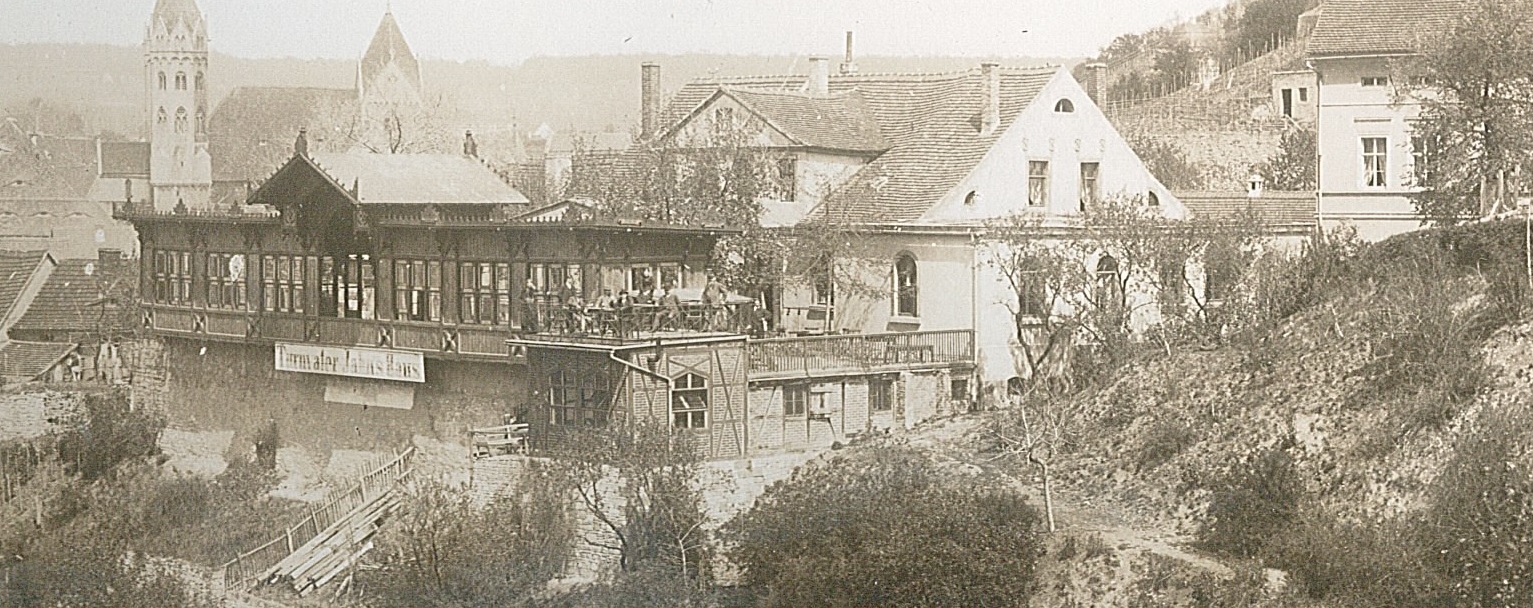
The residence of the "gymnastics father" around 1894.
His gymnasts proved themselves in 1813 in the Lützower Freikorps, in which he himself was one of the commanders. After the victorious Battle of the Nations at Leipzig, Jahn was involved with various commissions for the Prussian government, which granted him a lifelong honorary salary in recognition of his work.
In his marriage with Helene Kollhof (1814) three children were born. In 1815 the former Lützowers founded the Urburschenschaft on the basis of Jahn's ideas: free rights for all citizens, constitution and unity of the fatherland.
During this time he continued his work on gymnastics, which culminated in 1816 with the publication of his book, written with the gymnastics teacher Ernst Eiselen. "The German Art of Gymnastics" reached a climax. In it he described the variety of those physical exercises which, according to his understanding, fall under the term "gymnastics": Walking, running, jumping, swinging on the swing, today's pommel horse, hovering (balancing), exercises on parallel bars and high bar, climbing, wrestling as well as gymnastics games, swimming, fencing, riding and dancing. The work of Friedrich Ludwig Jahn began to bear fruit: By 1819, more than 150 gymnastics centres had been established in Prussia and other German states; Jahn gave lectures on German nationality in which he attacked the political system and small-scale statehood.
From 1818/19 Jahn and his gymnastics were banned in Prussia and other German states at the instigation of Metternich, the gymnastics centres were closed, Jahn was sentenced to five years' imprisonment, which he served in Spandau, Küstrin, Berlin and Kolberg.
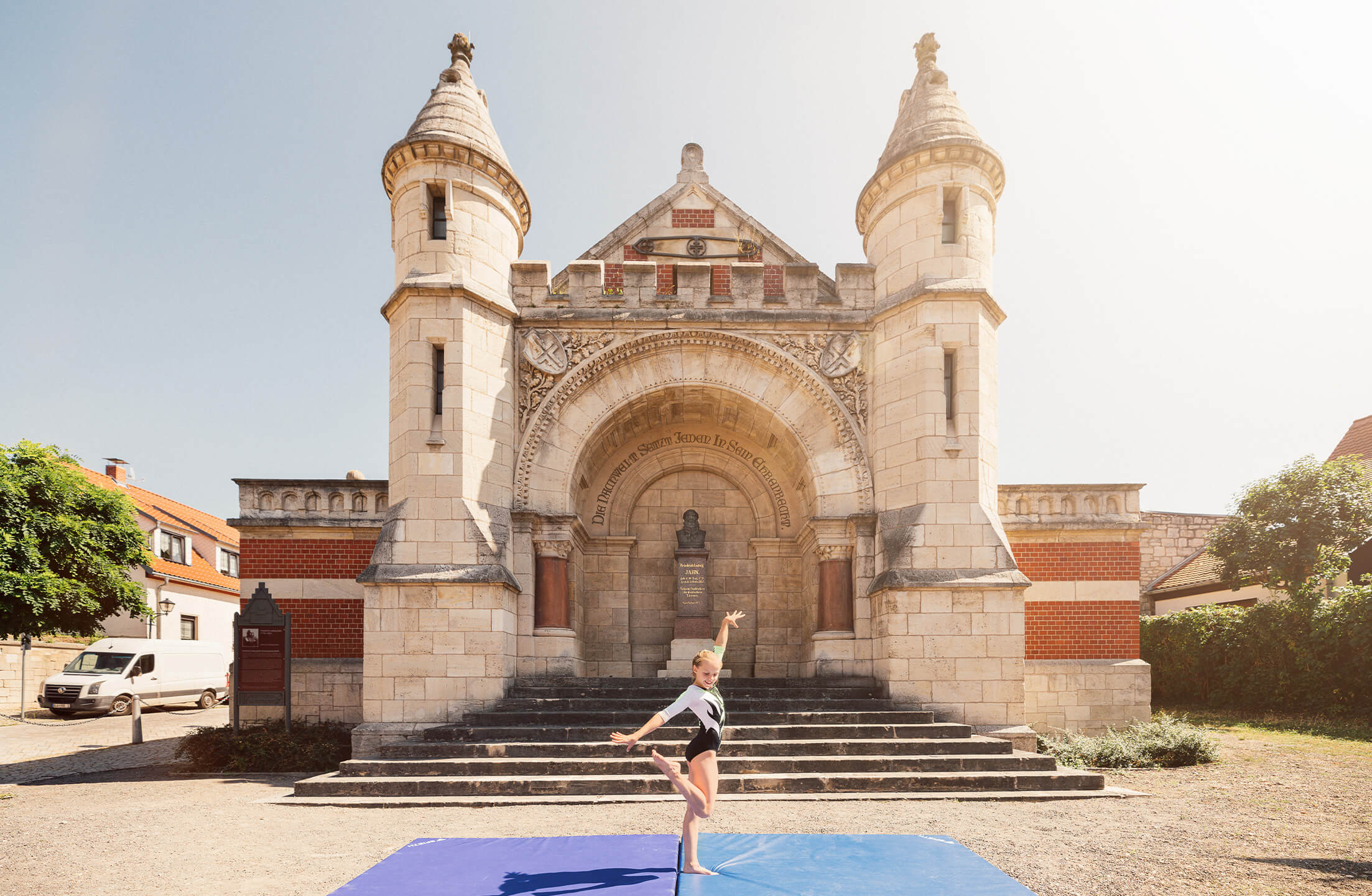
The memorial gymnasium with crypt was consecrated in 1894.
After the death of his wife Helene, he married Emilie Hentsch in 1825, who bore him a daughter. In the same year he was acquitted. The maintenance of the honorary pension was linked to the condition not to settle in any university or high school town in the future. Since then Jahn lived with a short interruption (banishment to Kölleda) in Freyburg an der Unstrut.
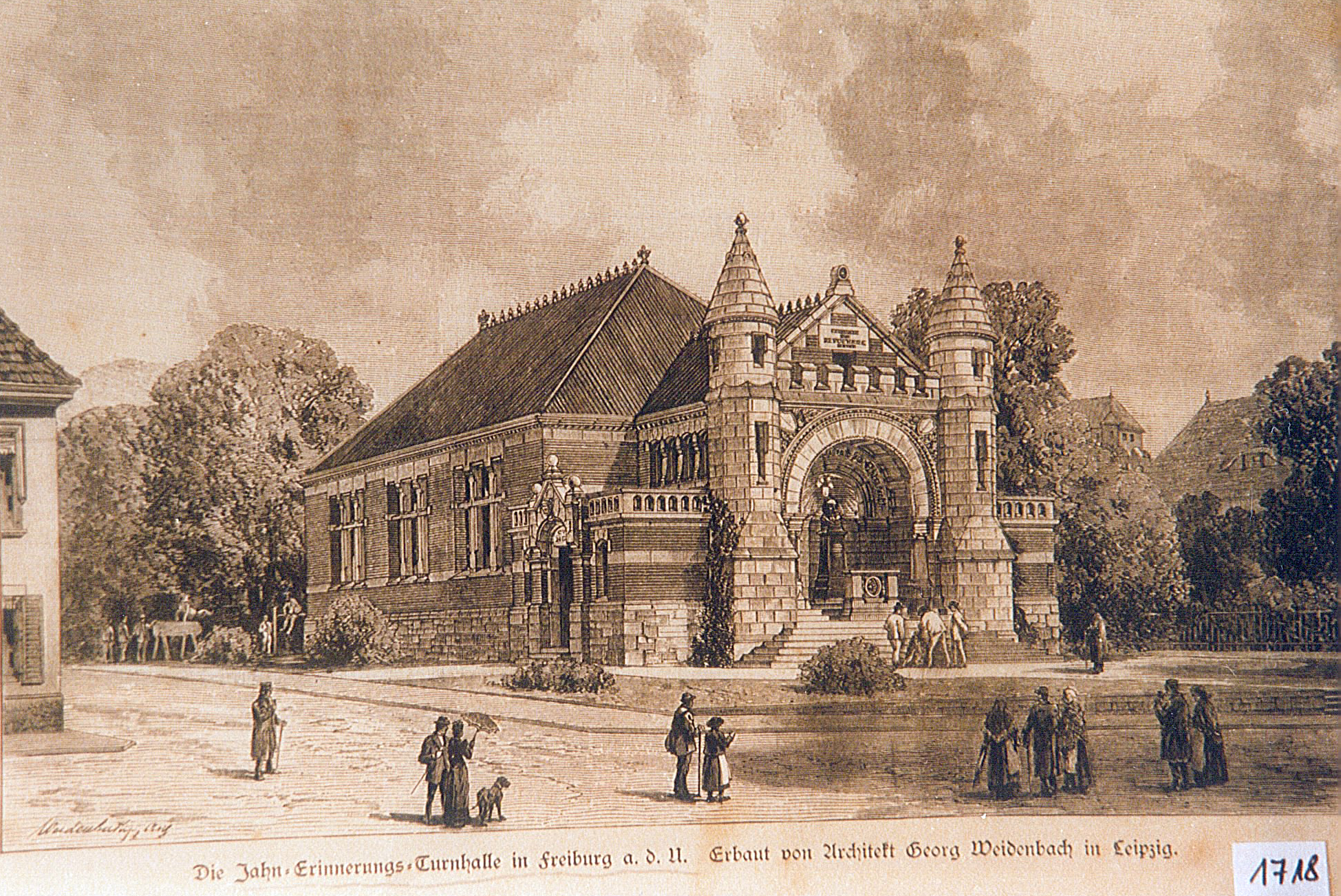
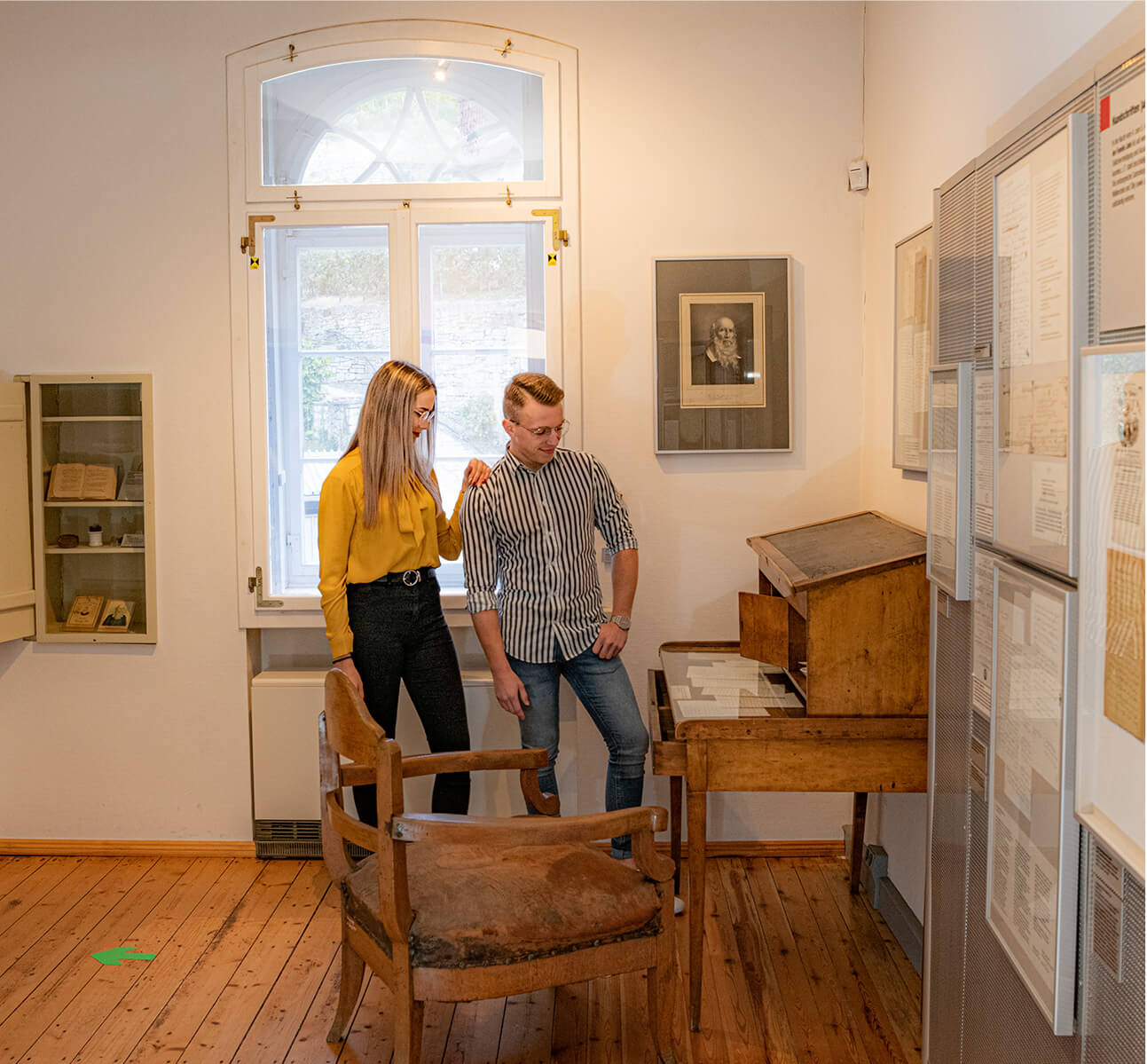
In 1838/39 he built his residence there, which today houses the Jahn Museum. In 1840 he was rehabilitated by King Frederick William IV and awarded the Iron Cross..
Jahn experienced the lifting of the gymnastics ban in 1842 with satisfaction, although he himself had long since ceased to be active. He had lagged behind social progress during this time. In the revolution of 1848 he did not understand the revolutionary gymnasts any more and was criticized by contemporaries because of his Germanism and other things as "Turnwüterich". Nevertheless, the gymnasts of the Merseburg constituency delegated him as their former fellow campaigner to the Frankfurt National Assembly, which ultimately failed. The complete break with the gymnasts occurred because the gymnasts felt betrayed by Jahn's reactionary positions in the National Assembly (open letter of the Hanau gymnasts).
Friedrich Ludwig Jahn took part in the founding of the German Gymnastics Federation in 1848. The "Swan Speech", in which he declared his support for German unity, was his reaction to the disagreement with the republican-minded gymnasts. On 15.10.1852 Friedrich Ludwig Jahn died in Freyburg / Unstrut.
Meaning and valuationMeaning and valuation
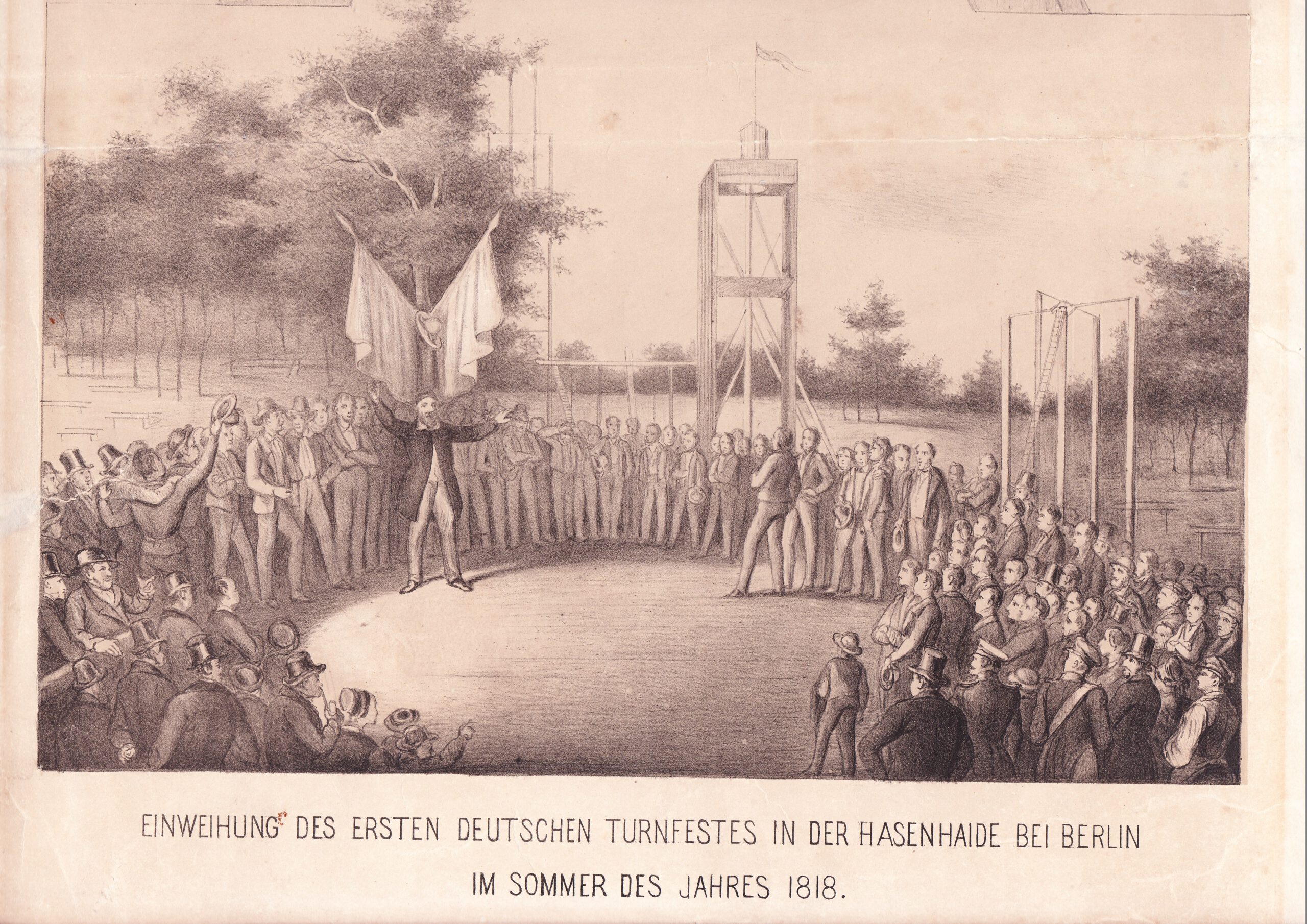
For the establishment of gymnastics and the construction of the first public gymnastics area, Jahn is still honored today.
Friedrich Ludwig Jahn experiences his current importance as the creator of the national gymnastics movementwhich led to the foundation of an immense number of gymnastics clubs, the German Gymnastics Federation and ultimately to the emergence of apparatus gymnastics as a world sport. The accusation that his motivation was based solely on his German nationalist and military concerns is true to a certain extent, but it must also be put into perspective insofar as Jahn's ideas and his work must be judged in the context of the historical circumstances. His politically contradictory behavior in the course of his life provided scope for the later different political systems in Germany to evaluate his thought in different ways.
The Friedrich-Ludwig-Jahn-Society tries to research and discuss Jahn, his work and the reception associated with him, in cooperation with scholars from very different disciplines, in order to achieve a critical but differentiated and balanced localization and evaluation.
Jahn's life and work were contradictory. Today his merits for the development of gymnastics and his commitment to the liberation from Napoleonic rule are undisputed. The exaggeration of his nationally oriented thoughts led in his speeches, letters and writings to xenophobia and exaggerated nationalism. Included in his nationalist ideas were also derogatory statements against Jews, French and other people who, in his view, acted contrary to his world view.
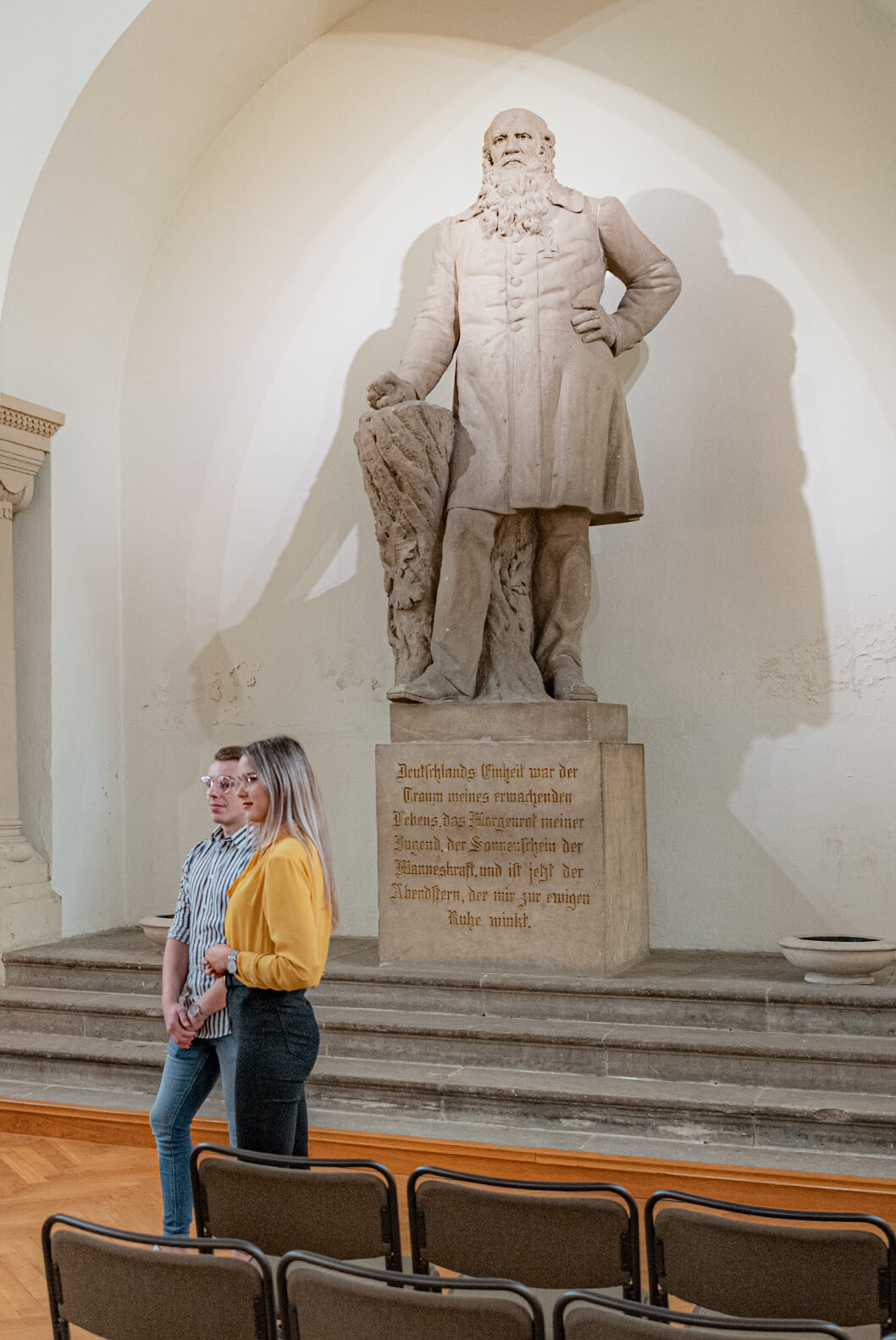
Jahndenkmal in the hall of honour. Created around 1903